

What is Lead Acid Battery
A lead acid battery is a rechargeable battery that uses lead and sulphuric acid to function. The lead is submerged into the sulphuric acid to allow a controlled chemical reaction.This chemical reaction is what causes the battery to produce electricity. Then, this reaction is reversed to recharge the battery.
Benefits of Lead Acid Battery
- Sealed maintenance free:The valve regulated, spill-proof construction of sealed lead acid batteries allows trouble-free, safe operation in any position. There is no need to add electrolyte, as gases generated during charging are recombined in a unique "oxygen cycle".
- Easy handling: No special handling precautions or shipping containers, either surface or air, are required for sealed lead acid batteries due to the leak-proof battery_ construction.
- Economical: The high watt-hour per dollar value is made possible by the materials used in a sealed lead acid battery: they are readily available and lower in cost than alternative battery chemistries such as lithium batteries.
- Long service life: Sealed lead acid batteries can have a design life of anywhere from3 - 5 years all the way up to 12+ years depending on the manufacturing process of the battery. There are many factors that affect the service life of the battery including temperature, for more information please view our technical manual.
- Design flexibility: Sealed Lead Acid batteries may be used in series and/or parallel to obtain choice of voltage and capacity. Due to recent design breakthroughs, the same battery may be used in either cyclic or standby applications. Our portfolio of battery products is one of the largest available in the industry.
- Rugged construction: The high-impact resistant battery case is made either of non-conductive ABS plastic. Large capacity batteries frequently have polypropylene cases; all of these materials impart great resistance to shock, vibration, chemicals and heat. Flame Retardant (FR) battery cases and lids are available across our portfolio of battery models.
- High discharge rate: Low internal resistance allows discharge currents of up to ten times the rated capacity of the battery. Relatively small batteries may thus be specified in applications requiring high peak currents.
- Long shelf life: A low self-discharge rate may allow storage of fully charged batteries for up to a year depending on storage temperatures. Please view our technical manual for more information on the affects of temperature on shelf life.
- Wide operating temperature: Power Sonic lead acid batteries may be discharged over a temperature range of -4°F (-20°C) to 140°F (60°C), and charged at temperatures ranging from- 5°F (-15°C) to 122°F (50°C).


Why Choose us
Quality services
We offer high quality services and products that are relatable and resonate with your business needs.
Quality
Benchmarking machinery has great influence,covering 1,500 companies and 15 well-known enterprises across the country
Experience and expertise
Our company has been in business for many years and has amassed significant expertise and experience to provide quality services to our clients.
Competitive pricing
We offer competitive pricing for our services without compromising on quality.
Certifications and quality standards
Choose a factory that adheres to industry standards and certifications to ensure product safety and quality.
How Do Lithium-Ion and Lead Acid Batteries Compare?
Cost
The one category in which lead acid batteries seemingly outperform lithium-ion options is their cost.While lead acid batteries typically have lower purchase and installation costs compared to lithium-ion options, the lifetime value of a lithium-ion battery evens the scales. Below, we'll outline other important features of each battery type to consider and explain why these factors contribute to an overall higher value for lithium-ion battery systems.

Capacity
A battery's capacity measures how much energy can be stored (and eventually discharged) by the battery. While capacity numbers vary between battery models and manufacturers, lithium-ion battery technology has been well-proven to have a significantly higher energy density than lead acid batteries. This means more energy can be stored using the same physical space in a lithium-ion battery. Because you can store more energy with lithium-ion technology, you can discharge more energy, thus powering more appliances for longer periods.

Depth of discharge
A battery's depth of discharge is the percentage of the battery that can be safely drained of energy without damaging the battery. While it is normal to use 85 percent or more of a lithium-ion battery's total capacity in a single cycle, lead acid batteries should not be discharged past roughly 50 percent, as doing so negatively impacts the battery's lifetime. The superior depth of discharge possible with lithium-ion technology means that lithium-ion batteries have an even higher effective capacity than lead acid options, especially considering the higher energy density in lithium-ion technology mentioned above.

Efficiency
Like solar panel efficiency, battery efficiency is an important metric to consider when comparing different options. Most lithium-ion batteries are 95 percent efficient or more, meaning that 95 percent or more of the energy stored in a lithium-ion battery is actually able to be used. Conversely, lead acid batteries see efficiencies closer to 80 to 85 percent. Higher efficiency batteries charge faster, and similarly to the depth of discharge, improved efficiency means a higher effective battery capacity.

Lifespan
Batteries are also similar to solar panels in that they degrade over time and become less effective as they age. Discharging a battery to power your home or appliances and then recharging it with solar energy or the grid counts as one “cycle.” The numbers vary from study to study, but lithium-ion batteries generally last several times the number of cycles as lead acid batteries, leading to a longer effective lifespan for lithium-ion products.
Guidelines and Tips for Maintenance of Lead Acid Battery
Charge in well ventilated area
During the charging process, hydrogen gas can be created and if confined in a small space, this could be explosive.
Don't store batteries in state of low charge
In order to prevent a process called sulphation, batteries should not be stored in a state of low charge - ideally they should always be charged after use.
Avoid "flattening" the battery
Totally dischraging or flattening a battery can significantly shorten its life. It is often found that once a car battery has been totally flattened, then its capacity is significantly reduced and it is likely to become totally discharged again. Old batteries that become flat should be replaced to avoid additional issues.
Ensure battery plates are covered
In some batteries it is necessary to top up the electrolyte level to ensure the plates are covered. This should be done using distilled water (not ordinary tap water as this contains contaminants that will redice the effectiveness of the electrolyte). Also never add new electrolyte. Top-ups are not required for many modern low maintenance types and it is not possible to gaina access to the battery chambers to do this.
Do not over-fill
When filling only fill to the designated level. Overfilling can cause the acid to spill out during charging.
Avoid charging at high temperatures
If the temperature is above 49 or 50°C, then avoid charging.
Gas bubbles on the plates indicate that battery is virtually fully charged
When gas bubbles start to appear ont he plates of what are called flooded lead acid batteries, this indicates the battery is fully charged and it starts to split the water molecules into hydrogen (negative plate) and oxygen (positive plate).
Do not allow the battery to freeze
Never allow a lead acid battery to freeze as this can cause irreparable mechanical damage. It is worth noting that a fully charged battery freezes at a lower temperature than a partially charged one.
4-Stage Charging for Lead Acid Battery
During Bulk charging, the lead acid battery is not at 100% state of charge and battery voltage has not yet charged to the Absorption voltage set-point. The controller will deliver 100% of available solar power to recharge the battery.
When the lead acid battery has recharged to the Absorption voltage set-point, constant-voltage regulation is used to maintain battery voltage at the Absorption set-point. This prevents heating and excessive battery gassing. The battery is allowed to come to a full state of charge at the Absorption voltage set-point. The green SOC LED will blink once per second during Absorption charging.The battery must remain in the Absorption charging stage for a cumulative 120 – 150 minutes, depending on battery type, before the transition to the Float stage will occur. However, Absorption time will be extended by 30 minutes if the battery discharges below 50 Volts the previous night.The Absorption set-point is temperature compensated if there is an internal temperature sensor or an RTS is connected.
When the battery is fully recharged, there can be no more chemical reactions and all the charging current is turned into heat and gassing. The float stage provides a very low rate of maintenance charging while reducing the heating and gassing of a fully charged battery. The purpose of float is to protect the battery from long-term overcharge. The green SOC LED will blink once every two (2) seconds during Float charging.Once in the Float stage, loads can continue to draw power from the battery. In the event that the system load(s) exceed the solar charge current, the controller will no longer be able to maintain the battery at the Float set-point. Should the battery voltage remain below the Float set-point for a cumulative 60 minute period, the controller will exit the Float stage and return to Bulk charging.
Certain battery types benefit from a periodic boost charge to stir the electrolyte, level the cell voltages, and complete the chemical reactions. Equalization charging raises the battery voltage above the standard absorption voltage so that the electrolyte gases. The green SOC LED will blink rapidly two (2) times per second during equalization charging. The duration of the equalized charge is determined by the selected battery type for the controller being used. Equalization Time is defined as time spent at the equalization set-point. If there is insufficient charge current to reach the equalization voltage, the equalization will terminate after a certain period of time with battery voltages above the Absorption voltage setpoint. This is done to avoid over-gassing or heating the battery.
Types of Lead Acid Battery
Flooded lead acid batteries
Flooded Lead Acid batteries are the most commonly found lead acid battery type and are widely used in the automotive industry. They provide the most cost effective solution, as the least cost per amp hour, of any lead acid battery type.The modern wet cell comes in two styles; serviceable and maintenance free. Normal flooded batteries require extra care and regular maintenance in the form of watering, equalising charges and keeping the terminals clean. Flooded cells need to be mounted the right way up and can be susceptible to spillage.
Sealed lead acid batteries
Commonly known as Valve Regulated Lead Acid (VRLA) or Sealed Lead Acid (SLA). SLA batteries are available in a few different formats. Their principal manufacturing process, including number of plates and plate thickness determines its designated end user application. SLA batteries tend not to sulphate or degrade as easily as wet cells and are regarded the safest lead acid battery to use.Two main versions of Sealed Lead Acid Batteries (SLA) are commonly found.
AGM sealed lead acid battery
AGM batteries offer the best price point in the Valve Regulated Sealed lead acid variety. AGM Sealed Lead Acid Batteries utilise an Absorbed Glass Matt (AGM) process which is superior to traditional flooded technology. Fine, highly porous, micro-fiber glass separators absorb the electrolyte, increasing efficiency by lowering internal resistance, which in turn boosts capacity. Lower internal resistance also means that the battery can be recharged much faster than conventional flooded or wet lead acid batteries. AGM batteries provide much larger capacity in a smaller case size and are able to be mounted on their side and shipped using standard shipping processes.
Materials Used for Lead Acid Battery
Lead peroxide (PbO2)
Dark brown, hard and brittle substance to form the positive plate.
Sponge lead (Pb)
The pure lead in soft sponge conditions creates the negative plate.
Dilute sulfuric acid (H2SO4)
A strong acid and a good electrolyte. It is highly ionised, and most of the heat released in dilution comes from the hydration of the hydrogen ions. It is used for the lead acid battery with a ratio of water: acid = 3:1.
Impact Handling's Top 9 Tips: Lead Acid Battery Maintenance
Monitor levels
Maintaining the correct battery fluid levels is an essential part of extracting the full performance potential from any battery. Levels should neither be too low nor too high – top up the cells so that the plates and separators are just covered by electrolyte. Battery manufacturers recommend that levels are regularly checked. Doing so will also help prevent premature damage or failure. Always make sure that only distilled, de-ionised water is used when topping-up any lead acid battery.
Top-up AFTER a charge and NOT before
As the water in lead acid battery is critical to the transfer of energy, the introduction of fresh water must occur at the correct time during its charging cycle, which is after the battery has completed its charge and never before. Electrolyte expands when it gets warm so topping up before a charge can result in spillage of electrolyte.
Ensure battery and charger compatibility
There is an important difference between a charger that simply works and one that is specifically designed to correctly charge a given type and make of battery. Check with battery suppliers to confirm that the correct charging equipment is being used. Using incorrect chargers can be extremely dangerous, can damage batteries and may also compromise insurance cover. Always follow the charging procedure shown in your charger's manual.
Allow batteries to fully charge
Batteries will always perform best after a full charge. Avoid the temptation to partially charge them, or to interrupt a charging cycle. Doing so could damage the battery permanently, reducing its capacity as well as potentially shortening its life.
Let batteries cool
A typical lead acid battery needs to be left for a good two hours to cool after every charge. Build this time into your charging schedule and make it a mandated part of your health and safety best practice.
Keep an eye on the BDI
Equipment operators should continually monitor the status shown on Battery Discharge Indicators. Batteries should ideally be recharged when their indicator shows around 25% charge remaining. Doing so will keep them in optimum condition and allow the battery to deliver its maximum capacity for longer. Newer machines are also programmed to cut out the hydraulic function when 80% discharge is reached, preventing lift, however drive functions remain unaffected.
Check Cables, plugs and chargers
Battery leads can be prone to damage or corrosion, as can plugs and chargers. Check all equipment and connections and report any frayed wires or worn insulation. A weekly visual inspection will help identify any issues before they can affect the operation of the machinery.
Use batteries evenly
When operating more than one battery, such as in multiple shift environments, make sure that they are all used and charged evenly. This will avoid the risk of any one battery being over-cycled, which could result in a decrease in performance and shortening of its useful life. Implementing Battery Monitoring System technology will keep operators informed of batteries' status and ensure even use.
Keep lids clean
The lids of battery cells should always be kept clean and free from debris. Doing so will prevent potential earth leakage and any subsequent reduction in capacity.
Applications of lead acid battery: beyond the automotive industry
Renewable energy storage
Renewable energy sources such as solar and wind power are gaining popularity as the world seeks to reduce its carbon footprint and transition to more sustainable forms of energy. However, the intermittent nature of these energy sources makes them less reliable than traditional power sources such as coal and natural gas. Lead-acid batteries can be used to store excess energy produced by renewable sources, which can then be used to power homes and businesses when the sun is not shining or the wind is not blowing. Lead-acid batteries are an ideal solution for renewable energy storage because they are cheap, easy to maintain, and have a long lifespan.
Telecommunications
Telecommunications networks rely on uninterrupted power to function. In areas with unreliable or no access to the power grid, lead-acid batteries are often used to provide backup power for cell towers and other communication infrastructure. The batteries are usually connected to a charger that is powered by the grid or solar panels, ensuring that they are always charged and ready to provide backup power in case of an outage.
UPS systems
Uninterrupted power supply (UPS) systems are critical in ensuring the continued operation of computer systems and other electronic equipment during power outages. Lead-acid batteries are often used in UPS systems because they are reliable and can provide a high level of power output for an extended period of time. They are also relatively inexpensive compared to other types of batteries and are easy to replace when they reach the end of their lifespan.
Electric forklifts
Electric forklifts are becoming increasingly popular in warehouses and other industrial settings due to their lower operating costs and reduced environmental impact compared to their gas-powered counterparts. Lead-acid batteries are often used to power electric forklifts because they are cheap, reliable, and have a long lifespan. The batteries can be recharged overnight and provide enough power for a full day's work.
Medical equipment
Many types of medical equipment, such as hospital beds, wheelchairs, and patient lifts, are powered by batteries. Lead-acid batteries are a popular choice for these applications because they are reliable, easy to maintain, and have a long lifespan. They are also relatively inexpensive, making them an affordable option for medical facilities that need to power a large number of devices.
Marine applications
Lead acid battery are commonly used in marine applications, where they provide the necessary power for onboard lighting, communication systems, and other electronic equipment. Marine batteries are designed to be more durable and resistant to corrosion than automotive batteries, making them an ideal solution for boats and other marine vessels. They are also often used as backup power for navigation systems and emergency lighting.
Characteristics of Lead Acid Battery
The voltage of electric lead acid batterys is created by the potential difference of the materials that compose the positive and negative electrodes in the electrochemical reaction.
A common voltage for automobile batteries is 12 volts (DC). But this battery consists of six 2V lead cells.
The cut-off voltage is the minimum allowable voltage. It is this voltage that generally defines the “empty” state of the battery.
The truth is that any lead acid battery, be it a Gel Cell, AGM or flooded batteries, should be cut off at 11.6 volts.
The coulometric capacity is the total Amp-hours available when the battery is discharged at a certain discharge current from 100% SOC to the cut-off voltage.
A common voltage for automobile batteries is 12 volts (DC). But this battery consists of six 2V lead cells. An average automotive battery might have a capacity of about 70 Ah, specified at a current of 3.5 A.
C-rate is used to express how fast a battery is discharged or charged relative to its maximum capacity. It has units h−1. A 1C rate means that the discharge current will discharge the entire battery in 1 hour.
Batteries gradually self-discharge even if not connected and delivering current. This is due to non-current-producing “side” chemical reactions that occur within the cell even when no load is applied.
A lead acid battery left in storage at moderate temperatures has an estimated self-discharge rate of 5% per month. This rate increases as temperatures rise and the risk of sulfation increases.
Some degradation of rechargeable lead acid batterys occurs on each charge–discharge cycle. Degradation usually occurs because electrolyte migrates away from the electrodes or because active material detaches from the electrodes.
Deep cycle batteries can provide 200 to more than 3000 discharge/charge cycles. Starting batteries are not designed for sustained discharge and will last for only 50-60 use cycles.
Depth of discharge is a measure of how much energy has been withdrawn from a battery and is expressed as a percentage of full capacity. For example, a 100 Ah battery from which 40 Ah has been withdrawn has undergone a 40% depth of discharge (DOD).
Uses of Sealed Lead Acid Battery
Deep cycle batteries
Deep cycle batteries provide long term power, where a constant flow of power is needed for a period of time. The term deep cycle refers to the fact that they can be discharged down to as low as 20% of a full charge. The uses for this type of battery include wheelchair and mobility scooters, industrial floor scrubbers, RVs, and trolling motors for fishing boats or other marine applications. It is possible to use a deep cycle battery as a starting battery, but it won’t have the power that a traditional starting battery does. They tend to be larger and heavier than general purpose batteries, since they have thicker lead plates which provides for the deep cycling. The life of this type of battery, or the number of cycles, depends on the average depth of discharge. If the discharge is too small or very deep, the battery will not last as long as one with an average depth of discharge around 50%.
Gel batteries
Gel batteries also offer long term power and the greatest number of cycles, making them ideal for heavy everyday uses such as heavy use wheelchairs, communications arrays, wind generation and solar power as well as trolling motors and RV uses. The sulfuric acid electrolyte in the gel cell is thickened with a silica material so it can’t spill, and these batteries can function even if installed upside down. They are safer than the general purpose battery, but they are more expensive.
High rate UPS batteries
High Rate UPS batteries are ideal for emergency situations because they deliver fast power for backup applications. They are heavier than some of the newer batteries on the market, but they are still the most popular because they are less expensive, and very efficient. They can provide a very large amount of energy for a short time period, so they are particularly good as starter batteries. They have a long lifespan and need little maintenance, making them ideal for data centers, emergency lighting or server banks.

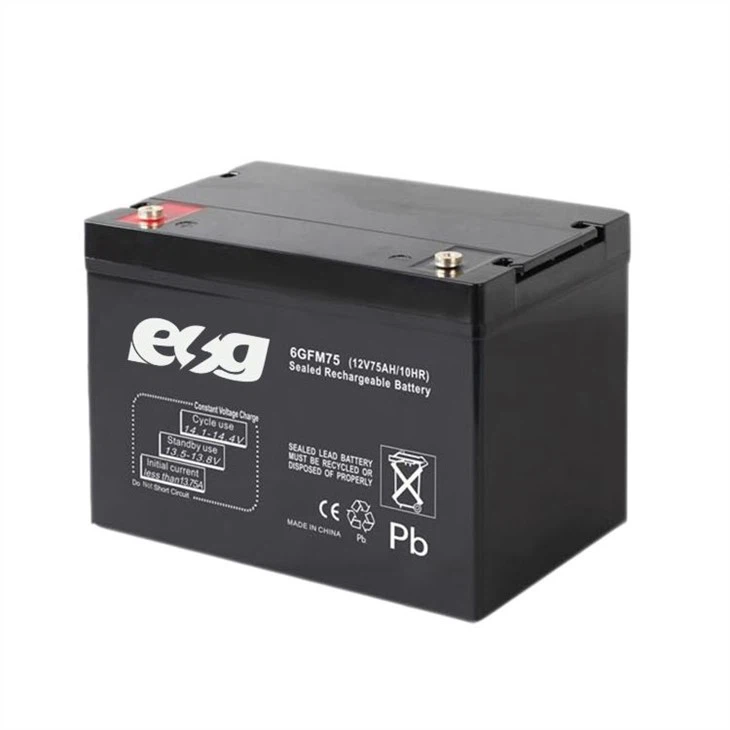
Since 1987, Guangzhou, China ESG New Energy Technology Co., Ltd has registered TOYO battery brand as one of 5 major suppliers designated by the China government for tender, now develops with ESG, HKTOYO, and Europe TOYO brand for global markets.
With the development of economy and the improvement of people's living standard environmental protection has become a common theme of human being. More and more countries focus on the carbon emission from manufacturing industry, so ESG stands out from "TOYO" with over 35 years experience of battery industry to act on international convention.
As ESG promotes intellectualized reform and digital transformation, Currently there are production bases in various cities of Guangdong for manufacturing SLA batteries and lithium batteries, which also extends to the field of new energy products including Battery,Solar panel, Inverter, Wind turbine, Portable system, Solar light, etc.
We have more than 30 senior engineers from YUASA TOYO with upgraded automatic intelligent production lines, so the staffs have been reduced from 3,000 to more than 1,000 people. The main materials and manufactures of ESG battery include alloy preparation, plate production, battery shell, separator production, all in one-stop manufacturing to ensure the stable and reliable quality of battery with better cost performance.

Company Certificate

Asked Questions
Q: Is it OK to leave a lead acid battery on charge?
Q: How many years do lead acid batteries last?
Q: What's bad about lead acid batteries?
Q: How many times can a lead acid battery be recharged?
Q: What kills a lead acid battery?
Q: Can a lead acid battery sit on its side?
Q: How do I know if my lead acid battery is still good?
Q: How often do lead acid batteries need water?
Q: What kills a gel battery?
Q: What is better than a lead acid battery?
Q: Do lead acid batteries discharge when not in use?
Q: Can a completely dead battery be recharged?
Q: Can a dead gel battery be recharged?
Q: What happens if you put vinegar in a lead acid battery?
Q: What does vinegar do to battery acid?
Q: Can a lead acid battery explode while charging?
Q: How does a charger know when a lead acid battery is full?
Q: How often do lead acid batteries need maintenance?
As one of the leading lead acid battery manufacturers and suppliers in China, we warmly welcome you to wholesale or buy discount lead acid battery from our factory. All customized products are with high quality and low price. Contact us for quotation and free sample.